Fun Christmas Lettering Clipart
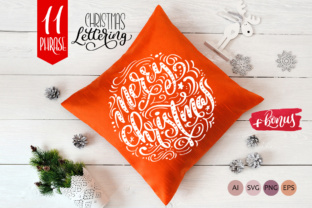
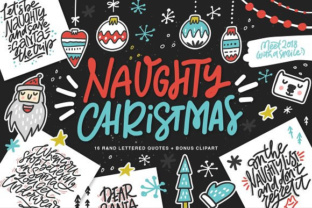
As a designer who’s stitched over 300 holiday projects—from boutique aprons to Etsy best-selling baby onesies—I opened Fun Christmas Lettering Clipart expecting cheerful energy. What I found was something more nuanced: a tight, playful script with subtle bounce, generous letter spacing, and just enough ornamentation (think tiny holly sprigs tucked between “C” and “H”) to feel festive—not fussy. It’s not a bold block font screaming for attention; it’s the kind of lettering that invites a smile when embroidered on a linen tea towel or stitched onto a soft cotton sweatshirt.
Where This Design Feels Like Home
I tested Fun Christmas Lettering Clipart on a custom organic-cotton tote bag for a local gift shop—intended for holiday markets. The design landed beautifully: legible at 4.5 inches wide, balanced in weight, and light enough in visual density to avoid stiffening the fabric. It worked equally well as a standalone chest emblem on a unisex crewneck and as a centered motif on a nursery pillow cover. That versatility isn’t accidental—it’s baked into the letterforms. The lowercase “g” and “y” have gentle descenders, not sharp hooks; the “o” and “e” are open and airy, avoiding fill-stitch congestion. That means fewer thread breaks, smoother satin stitch transitions, and cleaner edges after trimming.
For small business owners and Etsy sellers, this matters: Fun Christmas Lettering Clipart reads clearly in product photos—even on mobile—and translates well across mediums. I used it in a printable mockup for a holiday collection preview, then stitched the same file on a patch for a limited-run apron line. Customers responded to its warmth—not just the “Christmas” part, but the hand-drawn sincerity in the curves. It doesn’t look like stock clipart. It looks like something a human made, then digitized with care.
Real-World Embroidery Behavior: What Holds Up (and What Needs Attention)
This isn’t a one-size-fits-all embroidery file. Its charm lies in its balance—but that balance shifts depending on your fabric and application.
- Works best on stable, medium-weight fabrics: Think canvas totes, brushed cotton sweatshirts, twill caps, and linen tea towels. The lettering’s moderate stitch density keeps things pliable without sacrificing definition.
- Use cautiously on stretchy or thin fabrics: On lightweight jersey or baby rib knit, those open counters (the inner spaces of “a”, “e”, “o”) can distort if stabilizer isn’t layered thoughtfully. A tear-away + cut-away combo is wise here—not optional.
- Dark fabric? Prioritize contrast: I ran a test on navy fleece using white thread—clean, crisp, highly readable. But on charcoal heather, the same white thread lost some pop. Switching to ecru or ivory added warmth and improved legibility without looking washed out.
- Caps and curved surfaces need scaling: At full size, the “Fun Christmas Lettering Clipart” layout wraps awkwardly across a front cap panel. I reduced it to 3.25 inches and repositioned the holly accents slightly inward—solved the distortion and kept the rhythm intact.
- Avoid ultra-small hoop applications: Below 3 inches wide, the fine joins (like the tail of the “y” meeting the baseline) risk stitching inconsistently across machines. If you’re embroidering on baby socks or mini patches, simplify first—or choose a tighter, bolder variant.
What This Design Says About Your Finished Product
Your customers don’t see “clipart.” They see *your brand*. And Fun Christmas Lettering Clipart quietly elevates perception. When stitched cleanly on a handmade kitchen towel, it signals intention—not just holiday decor, but considered curation. On a personalized gift (say, a child’s name + “Merry Christmas” in matching script), it feels bespoke, not templated. That builds trust. Repeat buyers notice that consistency: same warmth, same clarity, same quiet professionalism across sweatshirt embroidery, embroidered patches, and nursery decor.
It also supports commercial viability. Because the layout avoids extreme detail or dense fills, it stitches reliably across mid-tier home machines and production-ready industrial setups alike. No excessive jump stitches. No nested underlay where it’s not needed. That means less downtime, fewer trims, and faster turnaround—critical for craft fairs or holiday order surges.
Practical Designer Notes Before You Stitch
Before adding Fun Christmas Lettering Clipart to your next batch of holiday embroidery files, do these five things:
- Run a test on scrap fabric matching your final project’s weight and texture—especially if using textured weaves or blends.
- Check thread color contrast in natural light *and* on camera. What reads well on screen may fade on dark fabric.
- Review stitch density visually—not just in software. Look for areas where fill stitches might crowd delicate curves (like the inner curve of the “C”).
- Confirm hoop size compatibility. If your machine maxes out at 4x4, verify the design fits comfortably within that boundary—including seam allowance space.
- Inspect small details at actual stitch-out size: Are the holly sprigs legible? Does the “i” dot stay anchored? Zoom in on your embroidery software preview before sending to the machine.
And always—always—verify licensing. Since Fun Christmas Lettering Clipart falls under Illustrations, confirm whether it’s cleared for commercial embroidery use, digital resale, or inclusion in bundled craft kits. When in doubt, reach out to the creator directly. Protecting your craft business starts with respecting the design assets you build upon.
Final Thought: A Design That Serves the Maker
Some holiday lettering shouts. Others whisper—and get overlooked. Fun Christmas Lettering Clipart does neither. It speaks with warmth, clarity, and quiet confidence. It’s the kind of embroidery file that makes your tote bag feel special, your baby onesie feel heirloom-worthy, and your Etsy listing stand out—not because it’s flashy, but because it’s *thoughtful*. For makers who value both aesthetic integrity and real-world stitchability, it’s not just another clipart download. It’s a reliable, joyful tool—one you’ll reach for again and again, long after the tinsel’s packed away.