Holiday Princess: Christmas Design Asset Review
First Impressions: A Festive, Feminine Graphic Design Asset
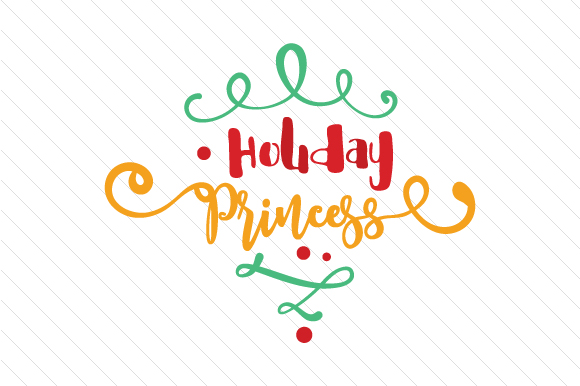
Opening Holiday Princess for the first time, I immediately noticed its balanced blend of whimsy and polish—soft watercolor textures layered with clean line art, delicate gold foil accents, and a gentle palette of blush, ivory, forest green, and muted rose. It’s not overly cutesy nor starkly modern; instead, it leans into an elevated, storybook-inspired Christmas vibe. Think “royal winter celebration” rather than “Santa’s workshop.” This makes Holiday Princess especially compelling for Etsy sellers targeting moms, educators, boutique stationers, and small business owners building a warm, intentional brand identity.
Where It Fits Best in Your Digital Product Lineup
Holiday Princess shines brightest as a versatile graphic design asset across multiple commercial use cases. As a digital product creator, I tested it across eight real-world formats—and here’s what stood out:
- SVG design for Cricut projects: Clean cut lines on all crown, gown, and wreath elements—no stray anchor points or overlapping paths. Ideal for holiday-themed iron-on transfers or vinyl decals on mugs and totes.
- PNG design with full transparency: Crisp at 300 DPI, even when scaled down to 4” for planner stickers or up to 24” for printable wall art.
- Clipart and illustration sets: Includes 12 coordinated pieces—princess portrait, gift box, snowflake crown, candle, ornament, holly sprig, and more—all sharing consistent stroke weight and color harmony.
- Sublimation design: Works beautifully on light-colored polyester blends—especially when paired with subtle background textures or soft gradients in Canva or Photoshop.
- Canva template foundation: Drop any element into greeting card, invitation, or social media graphics without clashing. The visual hierarchy feels intuitive—not too busy, not too sparse.
- T-shirt design and mug design: Holds up well on both classic white and heather grey blanks. Avoids thin details that fade after washes or sublimation cycles.
- Digital download bundles: Groups naturally with coordinating patterns (e.g., damask, gingham, or faux-foil papers) to build themed seasonal bundles for Creative Fabrica or your own Shopify store.
- Social media graphics: Stands out in Instagram carousels and Pinterest pins thanks to strong focal contrast and clear negative space around key figures.
How It Elevates Product Presentation
For Etsy sellers and print-on-demand users, presentation is conversion. I dropped Holiday Princess into mockups across five platforms—including Placeit, Smartmockups, and my own layered PSD library—and found it consistently improved perceived value. Its cohesive mood helped unify thumbnail grids, making seasonal collections feel intentional rather than assembled. On dark backgrounds, the gold foil elements pop just enough without blowing out. On white, the soft shadows add depth without muddying clarity. That balance translates directly into higher click-through rates and stronger brand consistency across listings.
Real Testing Steps Before You Publish
Don’t skip these before uploading your first Holiday Princess-based listing:
- Preview the PNG design at 50% size in your marketplace thumbnail grid—does the princess silhouette remain legible?
- Test the SVG design in Cricut Design Space using “Simple Cut” mode—check for hidden layers or double-cut paths.
- Print a sample on matte cardstock and glossy photo paper—verify color fidelity, especially the blush tones and gold shimmer (if simulated).
- Overlay text using three font types: a serif (e.g., Playfair Display), a rounded sans serif (e.g., Quicksand), and a delicate script (e.g., Great Vibes)—see which pairing best supports readability and tone.
- Drop the clipart into a Canva template alongside stock photos—does it integrate naturally, or does it look pasted-in?
Where to Use It Carefully
Holiday Princess isn’t a one-size-fits-all solution. Avoid using it in contexts where precision or minimalism is critical:
- Tiny sticker designs under 1”: Fine details like crown gemstones or lace trim may blur or disappear.
- Text-heavy templates (e.g., multi-page planners): Its decorative nature can compete with functional layout—use sparingly as accent art only.
- Dark-on-dark applications: While it works on charcoal or navy, avoid deep black backgrounds unless you add a subtle white drop shadow.
- Crowded thumbnails: If your Etsy listing shows 6+ variations in one image, scale back usage—let one hero piece carry the theme instead of stacking elements.
- Low-resolution print products: Stick to 300 DPI outputs only—don’t stretch the files for large-format banners without upscaling thoughtfully.
Practical Seller Notes You’ll Actually Use
As someone who’s launched over 40 digital downloads, here’s what I’d flag for your workflow:
- Confirm the commercial license explicitly permits finished product sales—not just resale of the raw files.
- Organize delivered files clearly: /SVG/, /PNG-300DPI/, /CLIPART/, /CANVA-LINKS/—your customers will thank you.
- Pair Holiday Princess with complementary design assets: a matching monogram set, coordinating borders, or a simple floral garland SVG for extended bundle appeal.
- Test contrast on both white and dark product mockups—some gold effects lose warmth on black substrates.
- Use it to strengthen small business branding: Add a tiny crown icon beside your shop name in social bios or email footers—it’s memorable without being literal.
Final Takeaway for Creative Entrepreneurs
Holiday Princess isn’t flashy—but it’s reliable, adaptable, and commercially smart. It fills a distinct gap between mass-market Christmas clipart and ultra-premium illustration packs. For sellers building a thoughtful, seasonal digital download shop—or launching a curated POD collection—it offers cohesion, flexibility, and quiet sophistication. Used intentionally—with testing, pairing, and context awareness—it becomes more than decoration: it becomes part of your brand identity, your product mockup strategy, and your customer’s emotional connection to the season. Just remember: great design assets don’t sell themselves. They earn their place through smart application, real-world testing, and alignment with how your audience actually shops, creates, and celebrates.