Christmas Floral Laurals and Wreaths
A Designer’s First Glance: Graceful, Not Overdone
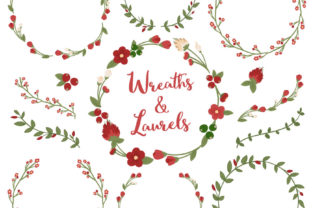
When Christmas Floral Laurals and Wreaths opened on my screen, I didn’t see “holiday clutter.” I saw rhythm—soft curves, balanced asymmetry, and botanical warmth that leans into tradition without leaning on cliché. This isn’t a tight, symmetrical wreath with rigid holly berries; it’s a loose, flowing laurel that breathes like hand-drawn ink. The floral elements—eucalyptus, soft sprigs of pine, maybe a hint of dried lavender—are layered with intention, not density. It feels like something you’d stitch onto a linen tea towel for a local boutique or frame as nursery decor—not just slap onto a sweatshirt and call it festive.
Real Project Test: A Custom Embroidered Tote for a Holiday Pop-Up
Last week, I prepped a small run of canvas tote bags for a local maker’s holiday market stall. The goal? Elegant but approachable—something that says “handmade with care,” not “mass-produced seasonal.” I chose Christmas Floral Laurals and Wreaths for the front left chest area (approx. 4.5” wide), paired with subtle cream thread on natural canvas. Here’s what happened in practice:
- Stitch clarity held up beautifully—even across the slight texture of mid-weight canvas. No skipped stitches, no thread nesting in the tighter loops of the laurel’s inner curve.
- The design scaled down cleanly. At 85% size, the leaf veins and petal edges remained legible—not muddy, not brittle. That’s rare in floral embroidery files where detail vanishes below 4”.
- Customers paused. Not just glanced. Three people asked, “Is that hand-embroidered?” before I clarified it was machine-stitched. That tells me the flow and spacing read as intentional, human-made—not algorithmically packed.
Where It Shines (and Where to Pause)
Christmas Floral Laurals and Wreaths fits naturally into projects where subtlety adds value—not volume. Think:
- Personalized baby onesies (stitched on the back yoke, not the chest—lets the shape drape softly)
- Aprons for kitchen boutiques (centered above the pocket, where the laurel’s curve echoes the apron’s waistline)
- Pillow covers in linen or cotton duck (the open layout avoids heavy fill stitch buildup)
- Embroidered patches for holiday-themed merch drops (clean outer edge = easy iron-on or sew-on application)
- Small-batch sweatshirt embroidery (best placed on the upper back or sleeve cuff—not center chest, where bulk could stiffen movement)
But—and this matters—don’t force it where its gentle personality gets lost. Avoid using Christmas Floral Laurals and Wreaths on:
- Thin, slippery fabrics like rayon challis (without extra stabilizer, the satin stitch areas can pucker unpredictably)
- Highly textured surfaces like bouclé or thick terry cloth (fine stems and delicate loops lose definition)
- Curved, tight spaces like cap fronts (the organic shape resists compression; corners may distort)
- Dark fabrics with low-contrast thread (test black thread on navy twill—it swallowed fine details; switching to heather gray thread brought back dimension)
What It Does for Your Craft Business—Beyond the Stitch
As an Etsy seller and small shop owner myself, I judge designs not just by how they stitch—but how they land with buyers. Christmas Floral Laurals and Wreaths elevates perceived value because it reads as *curated*, not generic. When stitched on a kitchen towel sold in a handmade shop, it signals attention to seasonal storytelling—not just holiday availability. That builds trust. Customers don’t buy “a wreath”; they buy “a quiet, grown-up Christmas moment”—and that translates to higher cart conversion and repeat visits.
It also supports brand consistency. Unlike busier holiday motifs, this design works across product categories without visual whiplash: same file, same thread palette, different placement—and your shop still feels cohesive. For digital product sellers, it’s strong as a standalone Illustrations-category asset. Its clean lines translate well into printable mockups, and its mood pairs effortlessly with serif typography or muted color palettes in branding kits.
Practical Notes Every Embroidery Designer Should Run Through
Before cutting fabric or loading a hoop, here’s what I always verify with Christmas Floral Laurals and Wreaths (and recommend you do too):
- Test on scrap fabric first—especially if using textured or stretchy material. Watch how the satin stitch wraps around curved stems.
- Check thread color contrast on both light and dark backgrounds. Some florals rely on shadow stitching; this one uses spacing and layering—so contrast matters more than you’d expect.
- Review stitch density. It’s moderate—not sparse, not dense. That’s ideal for wearables, but double-check if you’re stitching on delicate baby knits (add tear-away + cut-away stabilizer combo).
- Confirm hoop size compatibility. The full laurel spans comfortably in a 5x7 hoop, but smaller placements (like on a cap visor or baby bib) will need careful cropping—don’t assume auto-resize preserves balance.
- Inspect small details at actual stitch size. Zoom in on the tip of a pine needle or the curve where two stems overlap. If those vanish or blob together on your test piece, adjust tension or digitizing settings—not just scale.
- Try a black-and-white mockup. This design relies on form, not color. If it reads clearly in grayscale, you’ve got strong visual hierarchy.
- Verify licensing terms before listing finished products or bundling the file commercially. As an Illustrations asset, usage rights vary—always confirm before scaling production or resale.
Final Thought: A Design That Respects the Hand and the Eye
Christmas Floral Laurals and Wreaths doesn’t shout “Christmas!”—it invites quiet recognition. That makes it unusually versatile for real-world embroidery work: from a single custom tote bag to a curated line of holiday kitchen goods. It rewards thoughtful placement, honest fabric choices, and respect for stitch behavior—not just speed or flash. For designers, crafters, and small business owners who build value through intention, not volume, it’s not just another holiday file. It’s a reliable, graceful note in your seasonal design repertoire.